
Technology / How it works
Ultra-sensitive deformation sensors.
A thin, printed sensing layer that detects the slightest deformation and turns it into precise touch and force data, on any surface.
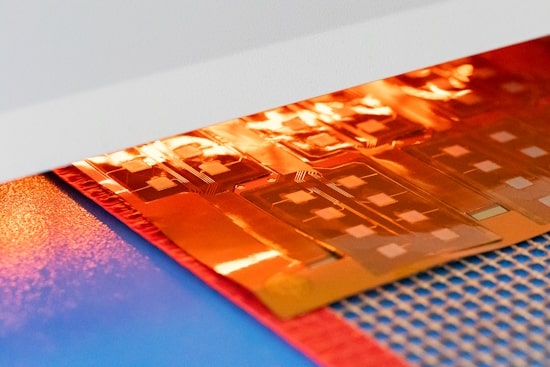
Physical principle.
Nanomade has developed a unique nanoparticle ink, coated onto a patented support fitted with conductive electrodes. As the ink evaporates, the nanoparticles settle evenly across the surface.
A microcurrent triggers a quantum tunnel effect: the slightest nano-deformation changes the spacing between particles, causing an exponential shift in resistance.
The result: tactile pressure sensors with unmatched sensitivity, the most sensitive in the world.
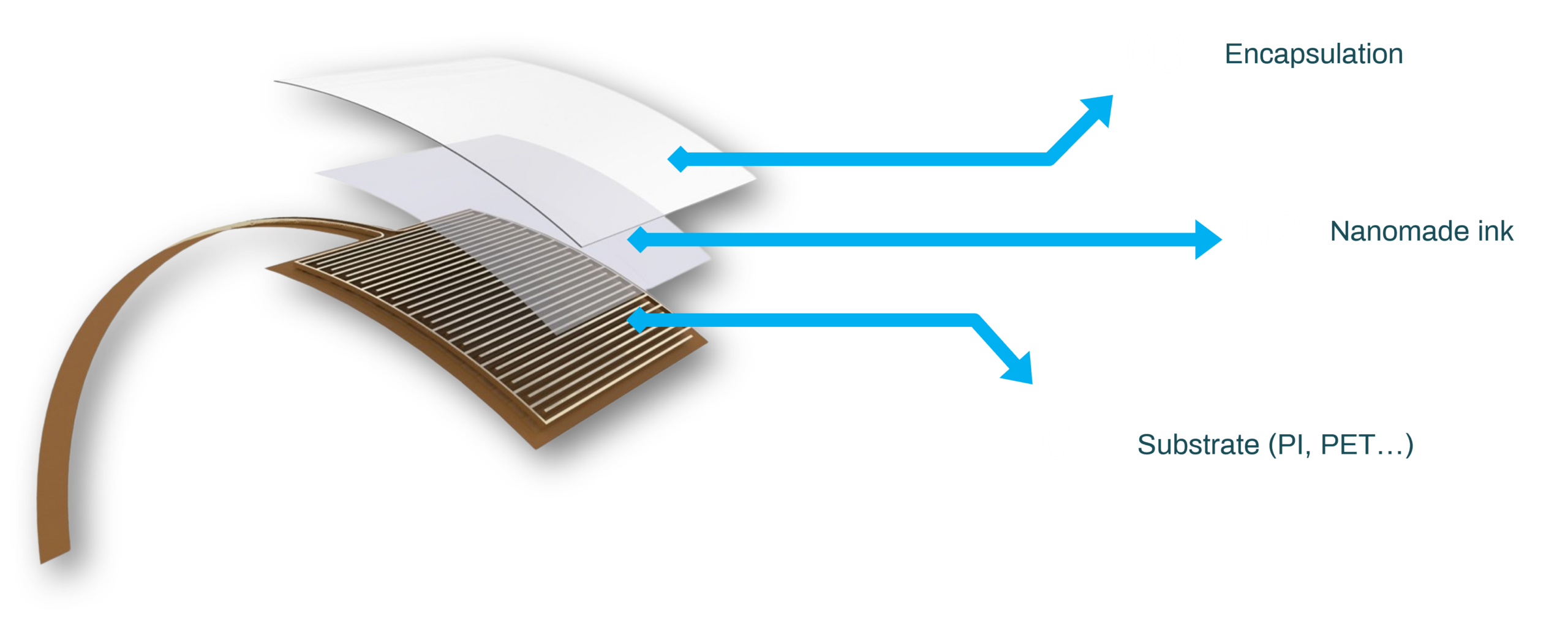
Sensor structure.
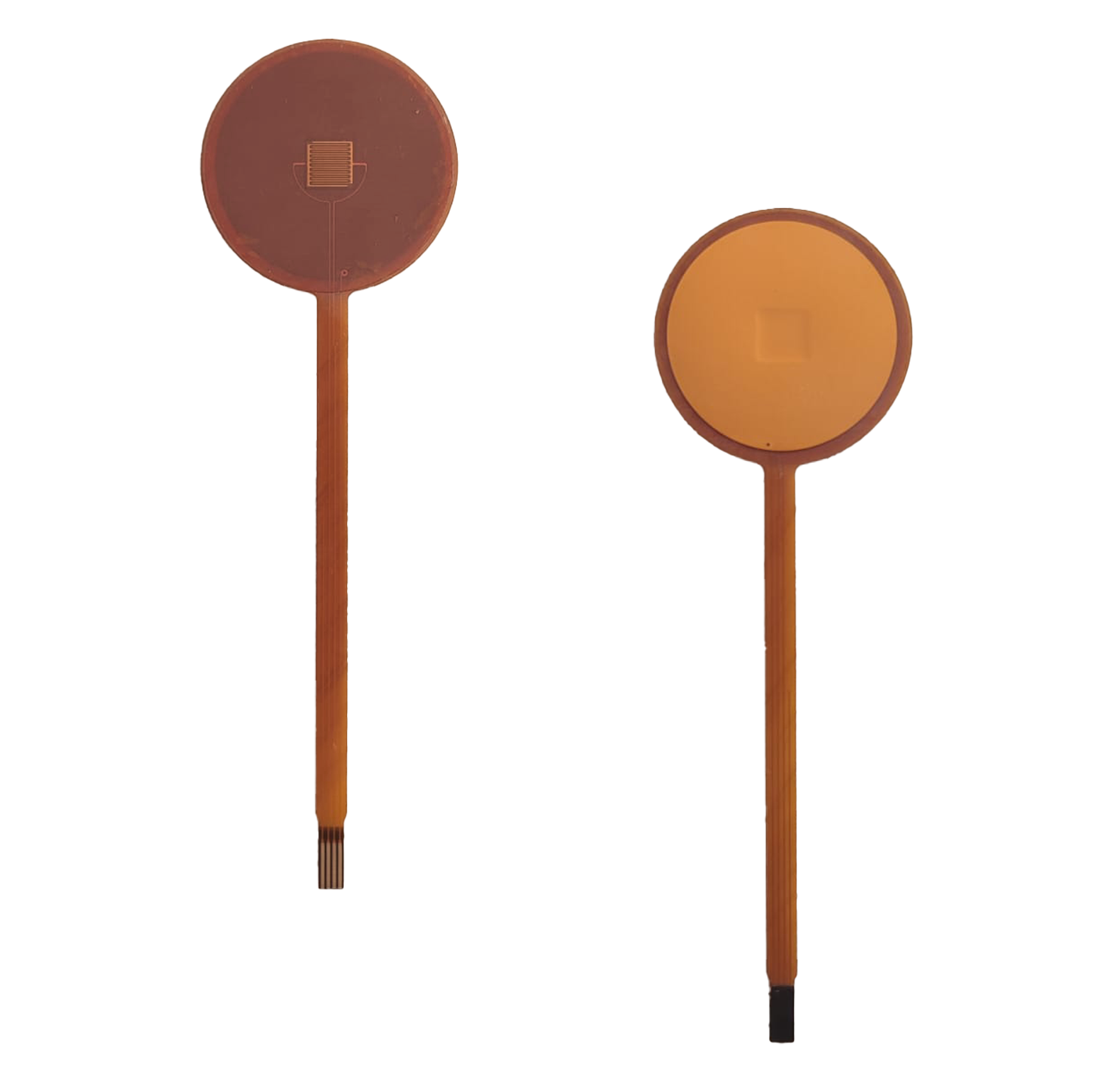
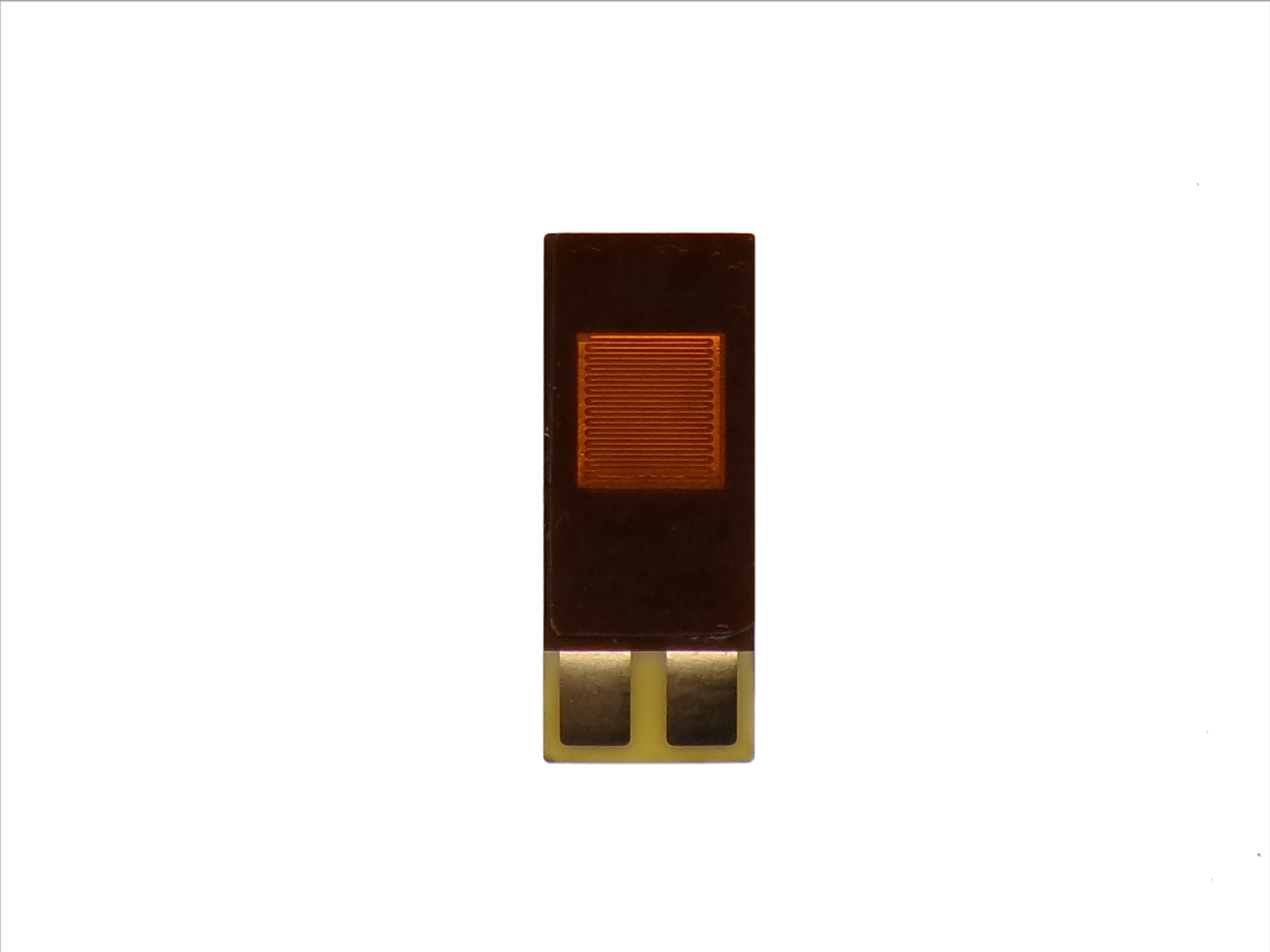
Nanomade strain sensors consist of a proprietary conductive ink containing nanoparticles deposited between interdigitated conductive electrodes on an insulating flexible substrate.
Sensor characteristics.
Ultra-sensitive (10gf
over 0.7 mm aluminium plate)
Ultra-thin (0.2 mm)
Flexible
Transparent
Designed around your product.
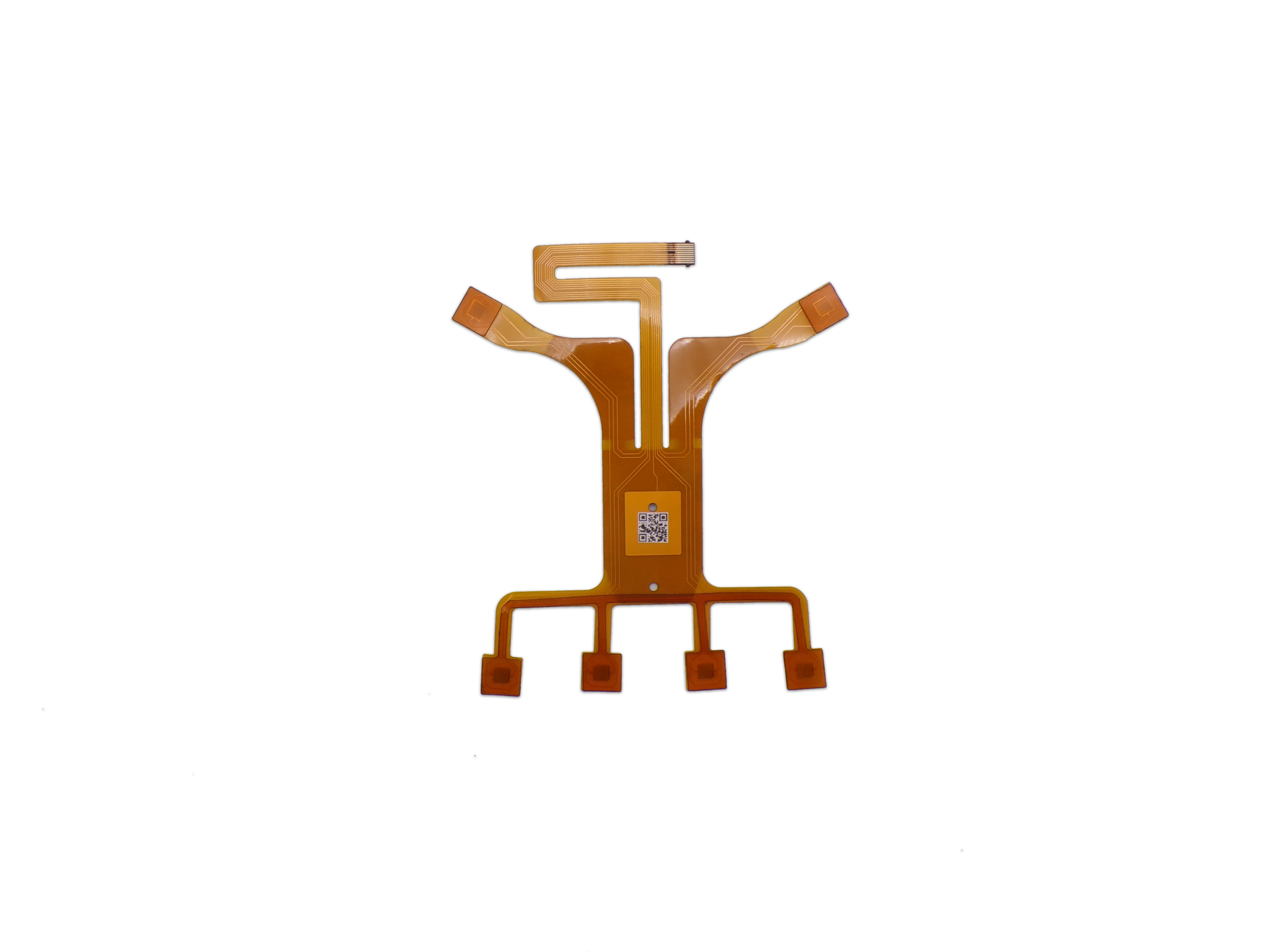
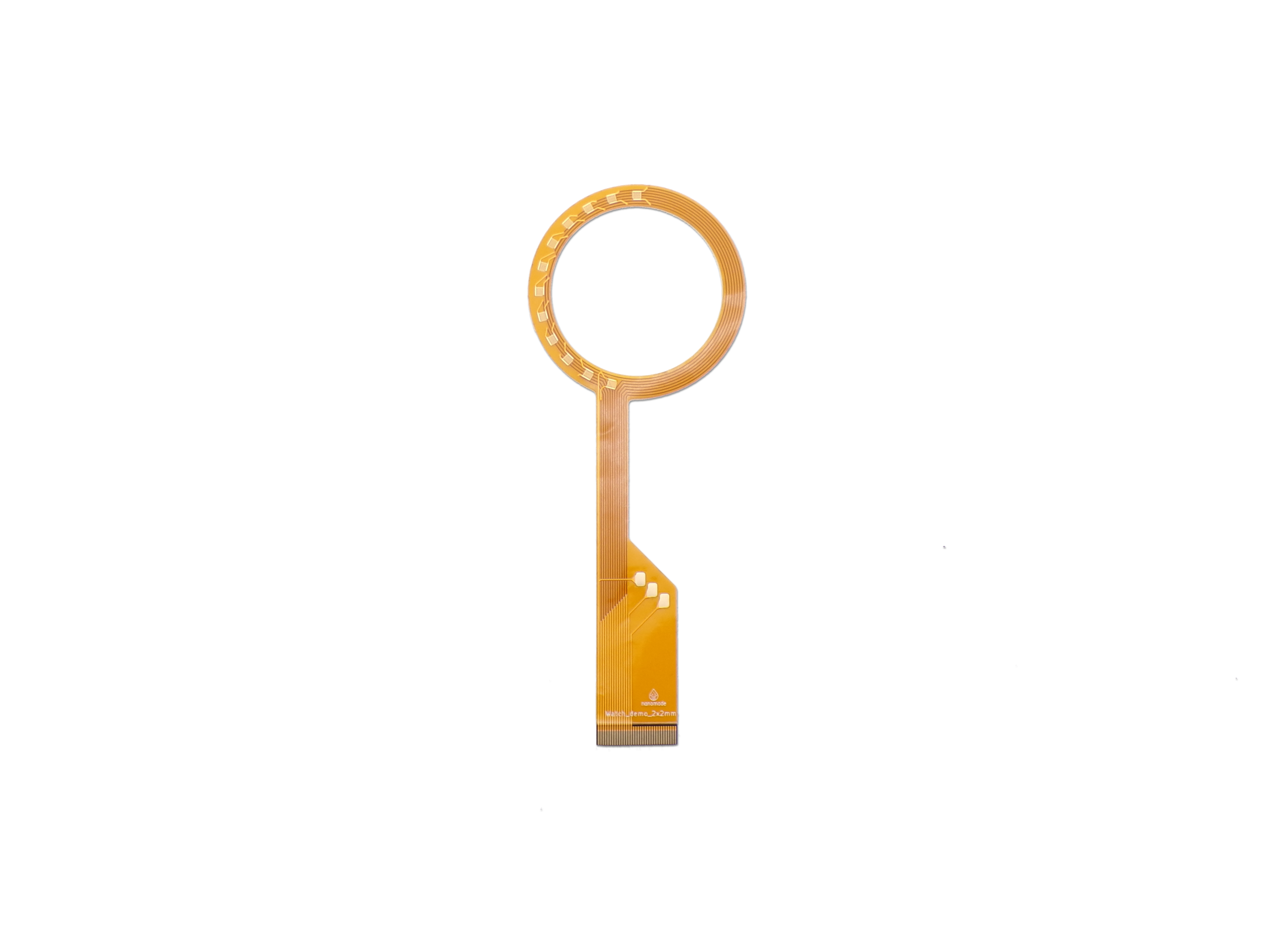
Every Nanomade sensor is custom-designed: size, shape and number of active zones are tailored to each client’s application. Whether it’s a curved surface, a narrow frame or a large panel, the sensor fits the product’s geometry and delivers exactly the features and gestures it needs, from a simple button to sliders and multi-zone controls.
Integration principle.
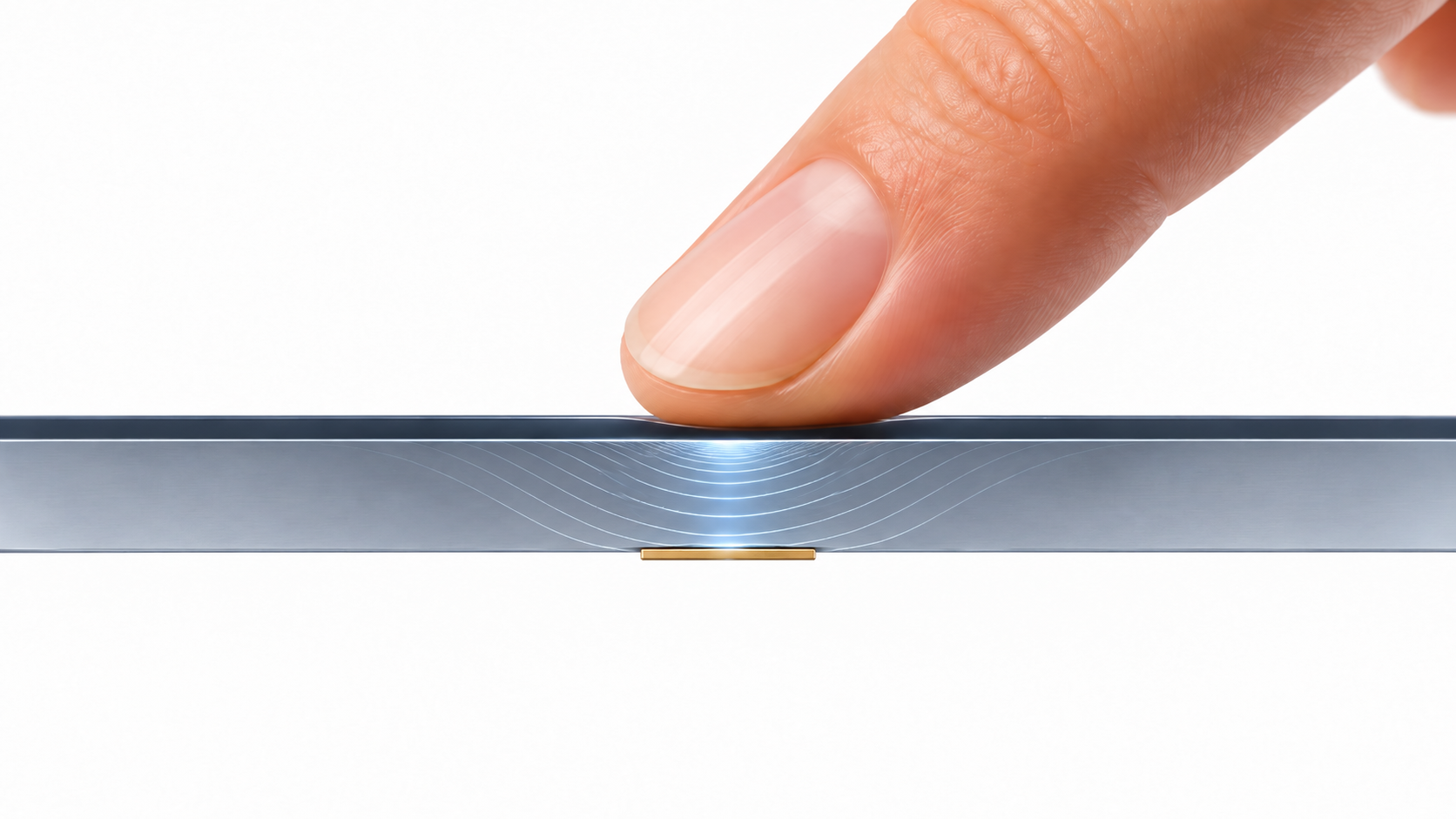
Our sensor’s strain-active zone detects micro-deformations of the material, turning the lightest touch into a precise pressure reading.
Nanomade sensors are bonded directly to the back of the surface, hidden from view. When a finger presses on the front, the material bends by just a few microns. The sensor’s strain-active zone picks up these micro-deformations through the material and turns them into a precise touch and force reading.
No cutouts, no openings, no change to the visible surface: the material stays intact and seamless, while gaining a fully interactive layer underneath.
No cutouts, no openings, no change to the visible surface: the material stays intact and seamless, while gaining a fully interactive layer underneath.
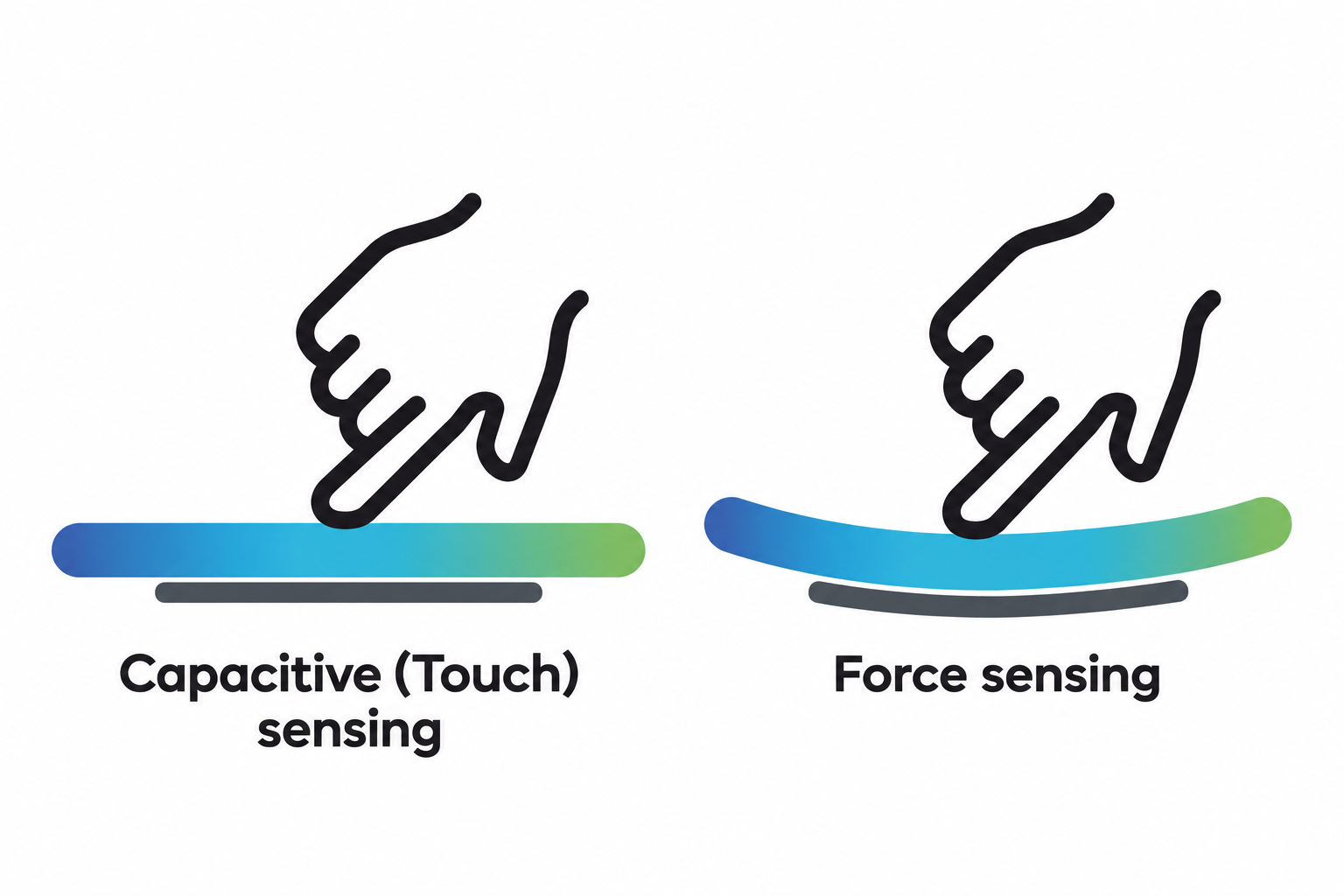
Capaforce® dual sensing.
Nanomade has patented a sensor that combines a capacitive electrode and a strain electrode on a single structure. Sold under the Capaforce brand, it measures two things at once:
Capacitive sensing detects where a finger touches the surface.
Force sensing measures how hard it presses, by picking up the micro-deformation of the material.
Together, they add a new dimension to interfaces. A light touch wakes up, illuminates or navigates the controls, and a firm press confirms the action. This two-step confirmation drastically reduces false activations, while keeping the whole system in one thin sensor.
Electronics & Signal.
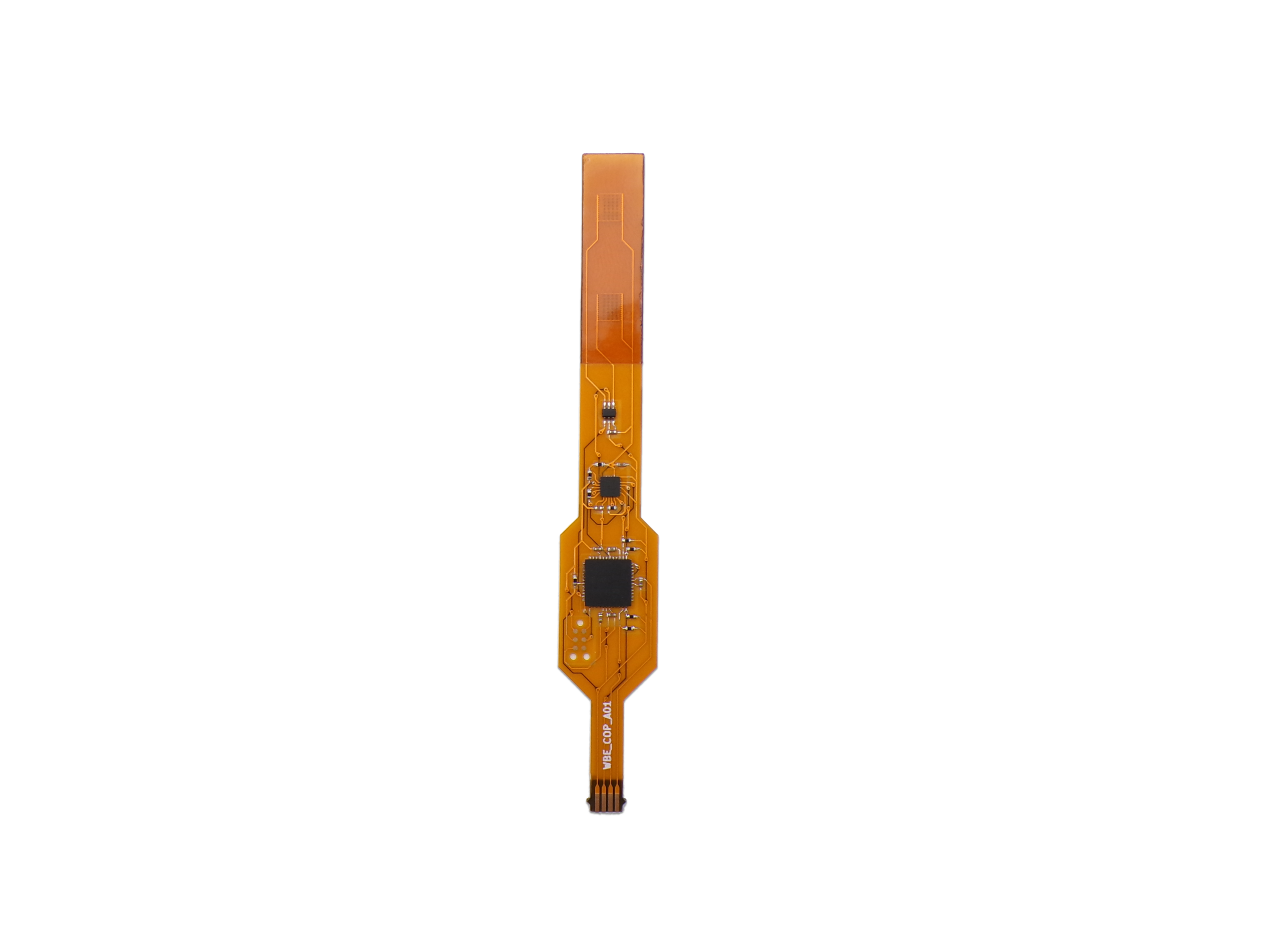
Our electronics are designed to stay simple. A compact chip-on-flex, with a dedicated IC currently in development, acquires and digitizes the sensor signal right next to the sensor. Our signal processing then fuses touch and force: touch detects presence, force confirms intent.
This lean architecture integrates easily into existing systems and is designed to meet the standards of demanding industries such as automotive and consumer electronics. It also connects to haptic feedback and lighting effects, so every interaction can be felt and seen as well as detected.
01
Sensor.
02
Chip-on-flex.
IC in development
03
Signal processing.
AI gesture recognition.
Our edge AI then turns raw sensor signals into intuitive interactions: compact models trained on data from your actual product run in real time on a standard microcontroller, with no cloud and no camera. Swipes, taps and presses are reliably recognised through curved surfaces and varied materials, within one unified software architecture tuned to each product’s user experience.
Each validated interaction can trigger gradual haptics or light effects, so the user both feels and sees the response. The result integrates seamlessly into the client’s product, whether smartglasses, earbuds, steering wheels or door panels. Every layer, from sensor shape to firmware, is co-designed with each client, from proof of concept to industrialisation.
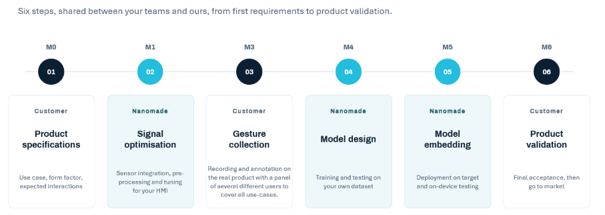
Six steps, shared between your teams and ours, from first requirements to product validation.
Explore sensing applications.
HMI / Force & Touch
Touch and force interactions integrated into product surfaces.
Have an application in mind?
Tell us what you need to measure, the surface or material involved, and how you want to integrate sensing.