
Applications / Automotive / Case studies
Windows Lifter.
Drivers expect window lift controls that are intuitive, safe, and aligned with modern interior design. While capacitive surfaces enable sleek and minimalist designs, they can cause accidental activation. Mechanical buttons remain more reassuring due to their clear physical feedback, but they limit design freedom and can wear out over time.
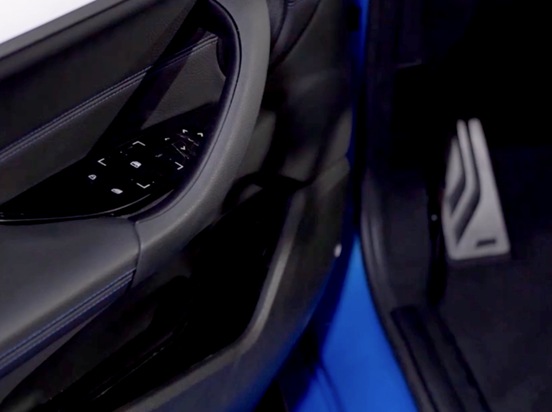
The challenge
For automotive integrators, technologies such as those from Nanomade enable more flexible HMI designs for window lifter systems by embedding sensing directly into surfaces. This solution overcomes key integration challenges by combining design freedom with reliable, progressive tactile feedback, while ensuring robustness, automotive compliance, and seamless integration into existing electronic and mechanical architectures.
Key benefits

Safe & Intuitive.
Force & touch sensors allow to detect only real intended actions. Can be integrated in 3D ergonomics shapes and combined with pressure related haptic feedback & lights effects.

Light & robust.
Ultra-thin, flexible & waterproof sensors. that are lifetime guaranted.
80% space & weight saving in comparison with mechanical buttons.

Easy integration & recycling.
One customized design with several active zones to peel and stick. Can be easily separated for recycling.
From development to final use
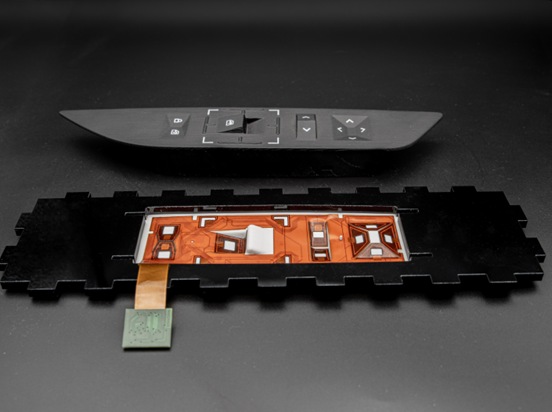
01 — Product development
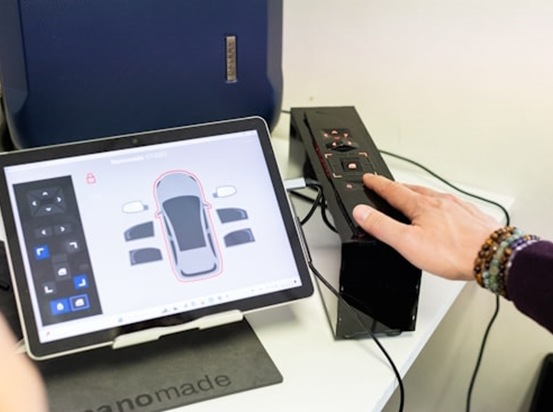
02 — Prototype
03 — Final use
Have an application in mind?
Explore how Nanomade’s force and touch technology can enable intuitive, reliable controls within your automotive interior.