
Applications / Robotics
Robotics.
Robots now handle objects of every kind, from fragile components to heavy loads. To interact safely and precisely with their environment, they need sensing that keeps up.
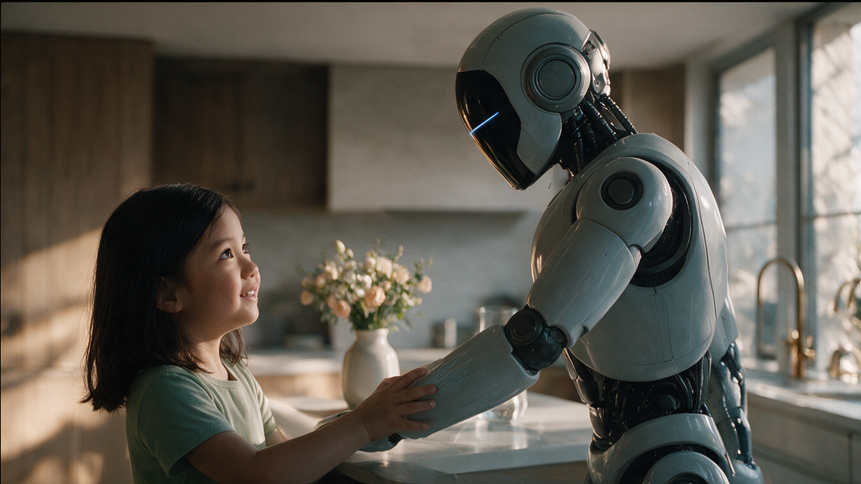
Sector constraints.
01
Wide force range.
Traditional force sensors can reach their limits under repeated high loads, losing the ability to detect finer interactions afterwards. Robots need to sense both heavy and delicate contact, reliably, over time.
02
Fine touch detection
Better interaction depends on more precise detection of touch and force variations, from first contact to a stable grip.
03
Sensing built into the structure.
Robot arms and joints leave little room for added sensors. Nanomade’s deformation sensors integrate directly into the robot’s fingers, joints, wrists and elbows, measuring deformation of the structure itself with high precision.
04
Integration in tight spaces.
Robot arms and joints offer complex geometries and very little room. Sensors must be miniaturized, flexible and adaptable enough to follow these shapes without compromising measurement performance.
Products and surfaces concerned.

01 — Robots finger
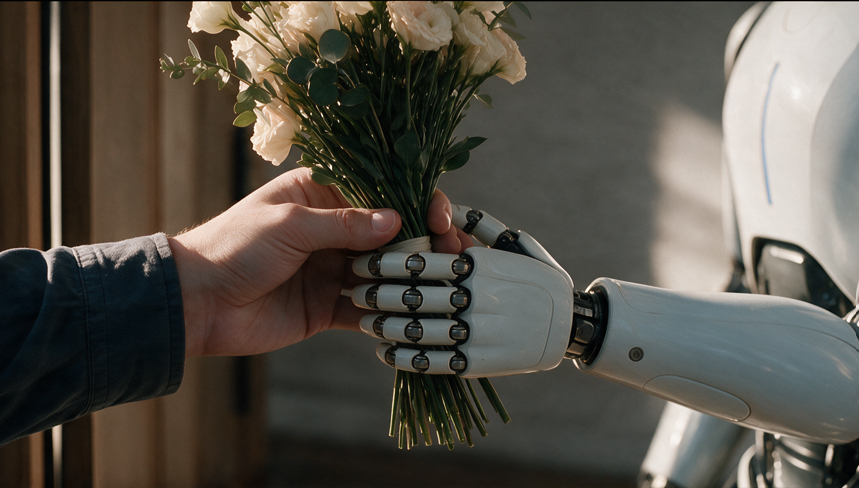
02 — Grippers
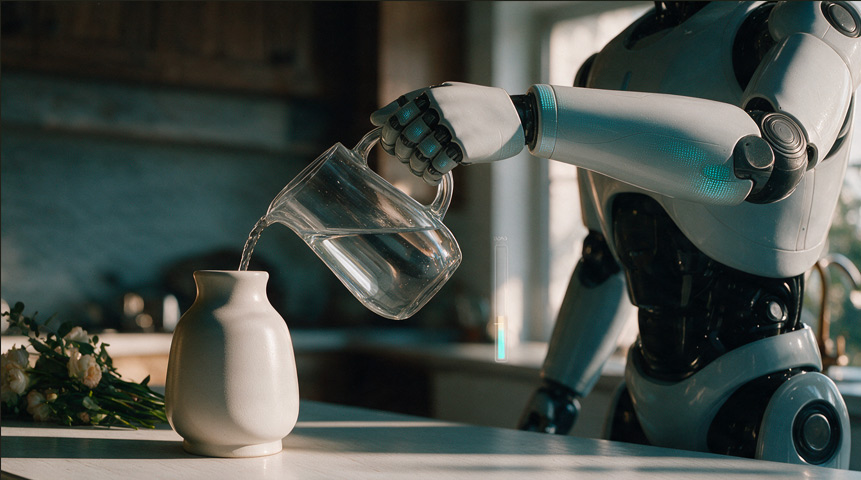
03 — Robot hands
04 — Tactile skin
Relevant Nanomade capabilities.

01 — Contact sensing.
Ultra-sensitive: detects subtle deformations from delicate contacts to higher loads.

02 — Force information.
Wide sensing range: few Newtone to several tens of N High resolution across the range.

03 — Custom geometry.
Complex geometry compatible: any 3D shape, curved & complex surfaces.

04 — Thin/flexible integration.
No compromise on design or functionnality.
Case studies & references.
Explore how Nanomade sensing technology enables new interactions and integration possibilities.
Have an application in mind?
Tell us about your product, the surfaces you want to make interactive and the interactions you want to create.